Pow! Boom! Thwip! The Most Iconic Comic Book Sound Effects
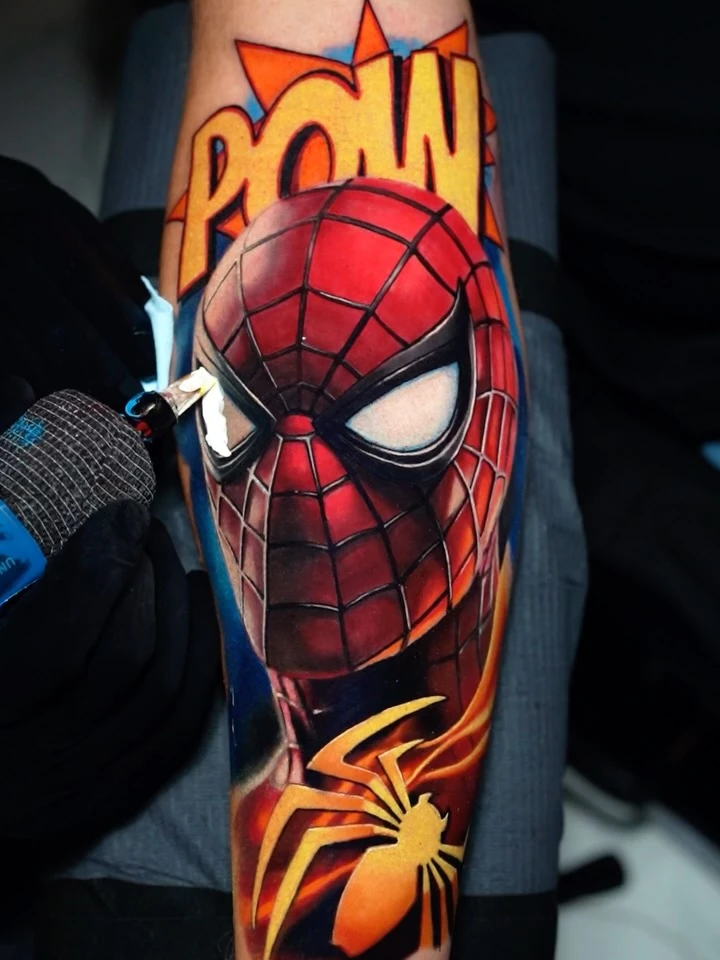
Comics cannot make noise, so they draw it. Big, bold, colorful words that explode across the page: Pow!, Boom!, Bang!. Comic book sound effects are one of the most recognizable parts of the medium, and they are also one of the best ways to bring a tattoo to life. Here is a look at the most iconic ones, and how they work on skin.
What are comic book sound effects?
Sound effects in comics are onomatopoeias: words that imitate a sound. Artists draw them as part of the art, with shapes, colors and outlines that show the energy of the moment. A punch, an explosion or a web being shot all have their own sound, and their own lettering style.
The classics: Pow!, Bam! and Zap!
The 1960s Batman television series made comic sound effects famous far beyond comics. Its fight scenes flashed words like Pow!, Bam! and Zap! across the screen, and those words became shorthand for comic book action.
Pop art took them even further. Roy Lichtenstein's 1963 painting Whaam!, now in the collection of the Tate in London, turned a comic panel with a giant sound effect into a museum piece.
Character sound effects
Some characters have sounds that belong only to them:
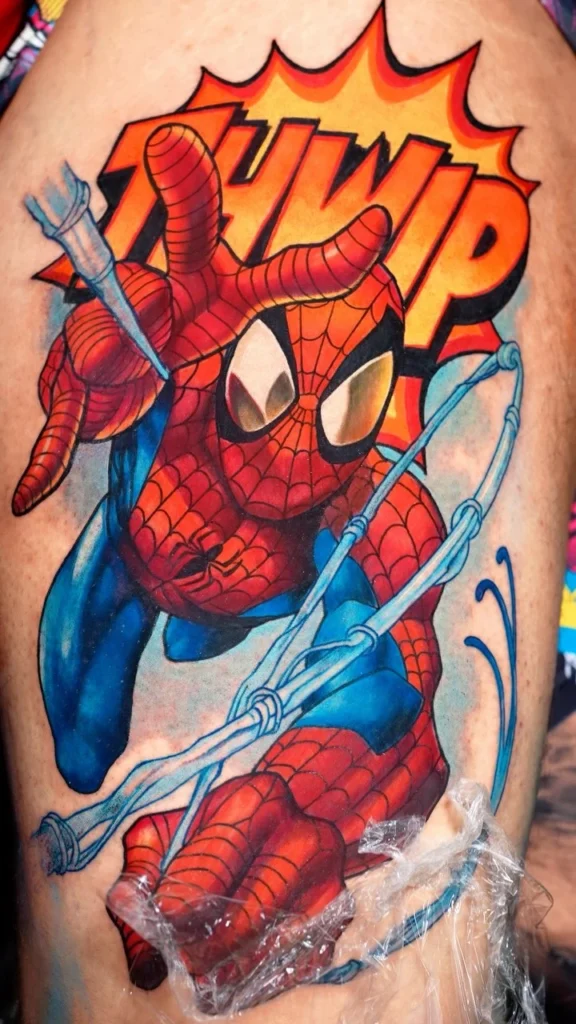
- Thwip! — Spider-Man's web-shooters.
- Snikt! — Wolverine's claws coming out.
- Bamf! — Nightcrawler's teleport.
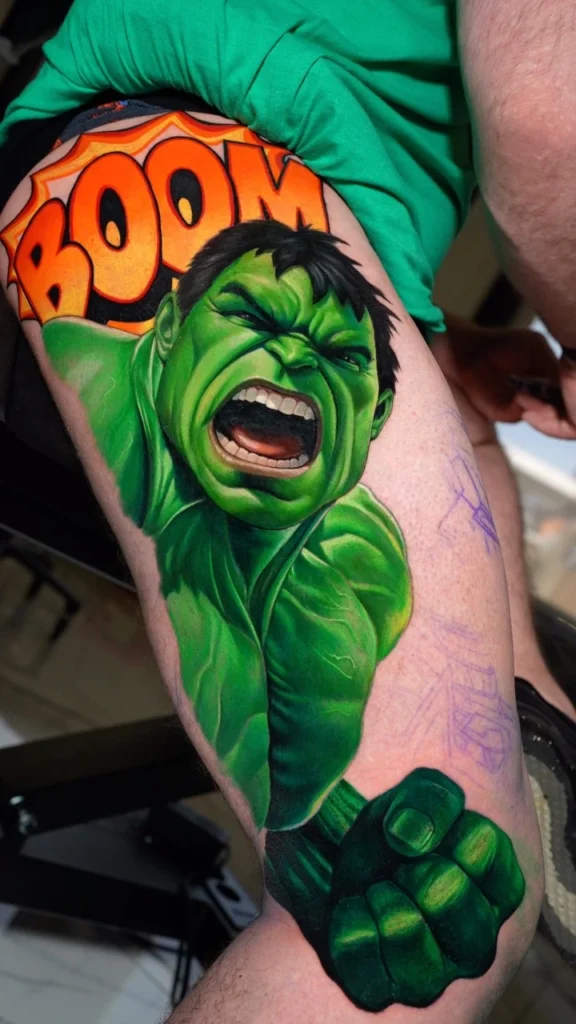
- Hulk smash! — not a sound, but a famous battle cry.
Boom! and Bang!: explosions and action
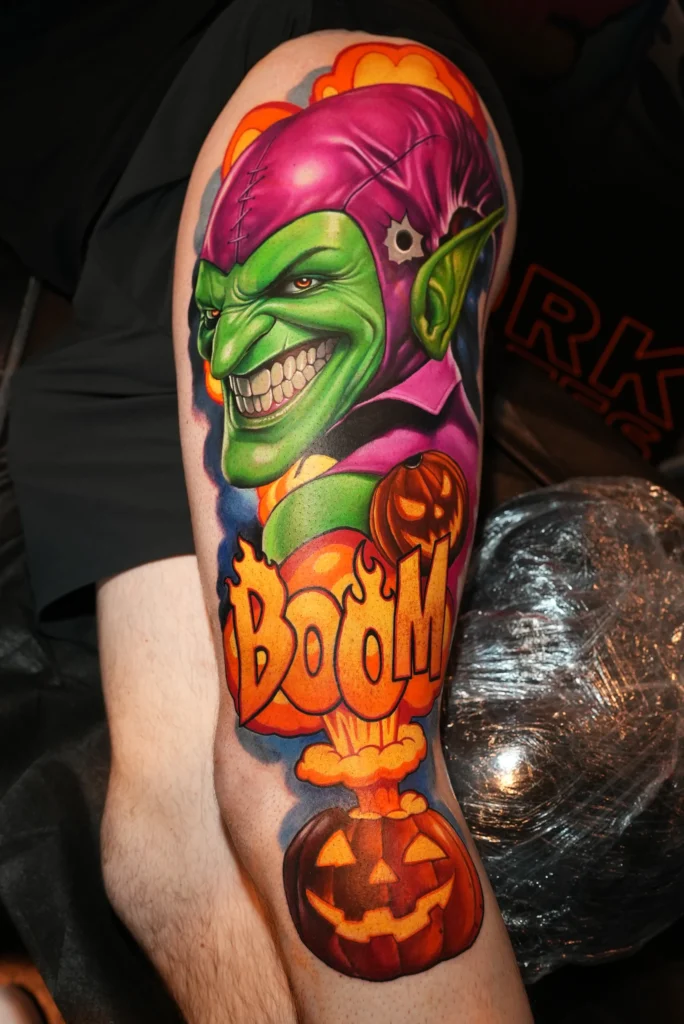
Explosions are perfect for adding energy to a villain or a hero in action.
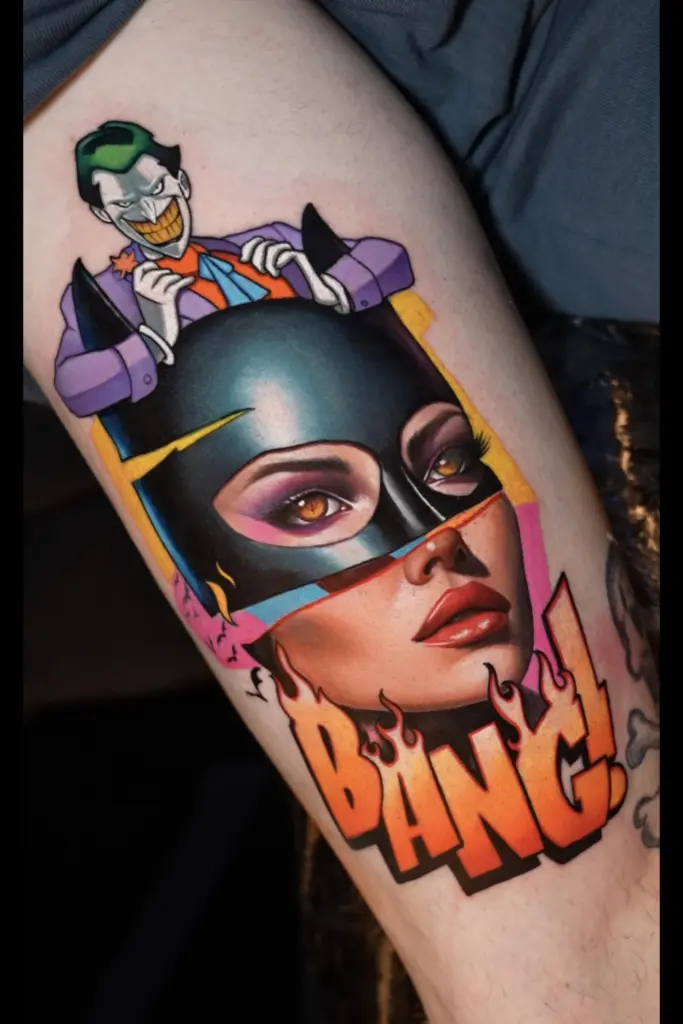
Lettering styles for comic book sound effects
Comic book sound effects are as much about shape as about the word itself. Some classic styles:
- Burst shapes: a jagged star or explosion behind the word.
- Thick outlines and drop shadows that make the letters look three-dimensional.
- Halftone dots, the printing texture of old comics.
- Dripping or slimy letters for creepy or gross sounds.
- Flames for explosive or fiery moments.
Sound effects without a character
A sound effect can even be the main subject of a small tattoo: a bold Pow! or Boom! with comic outlines and halftone dots. It is a fun way to show your love for comics without choosing a single hero.
Combining sound effects in a sleeve
In a sleeve, comic book sound effects can work as connectors between characters, filling the space and keeping the energy of a comic page from one end to the other.
More sound effect ideas
- Kaboom! for a big explosion.
- Whoosh! for a hero flying past.
- Zap! for a laser or a blaster.
- Crash! for a dramatic entrance through a wall.
- Wham! for a classic punch.
How comic book sound effects work in tattoos
In my tattoos, a sound effect does more than decorate. It adds movement, tells the viewer what is happening and keeps the energy of the original comic. Next to a realistic character, the bold, flat lettering creates a fun contrast between comic art and color realism.
Tips for adding a sound effect to your tattoo
- Choose a sound that fits the character. A web-shooter, a punch or an explosion each tell a different story.
- Plan the placement. The lettering should frame the character, not cover it.
- Use bold color and outlines, so the word reads clearly from a distance and ages well.
- Give it room. Lettering needs enough size to stay legible.
See how sound effects connect comics and tattoos in a short history of comic book tattoos, explore the Marvel tattoo gallery and send me your idea. I work at Garden Ink NY in Manhattan.
Sources
- Whaam!, Wikipedia.
- Batman (TV series)), Wikipedia.