A Short History of Comic Book Tattoos: From Sailors to Superheroes
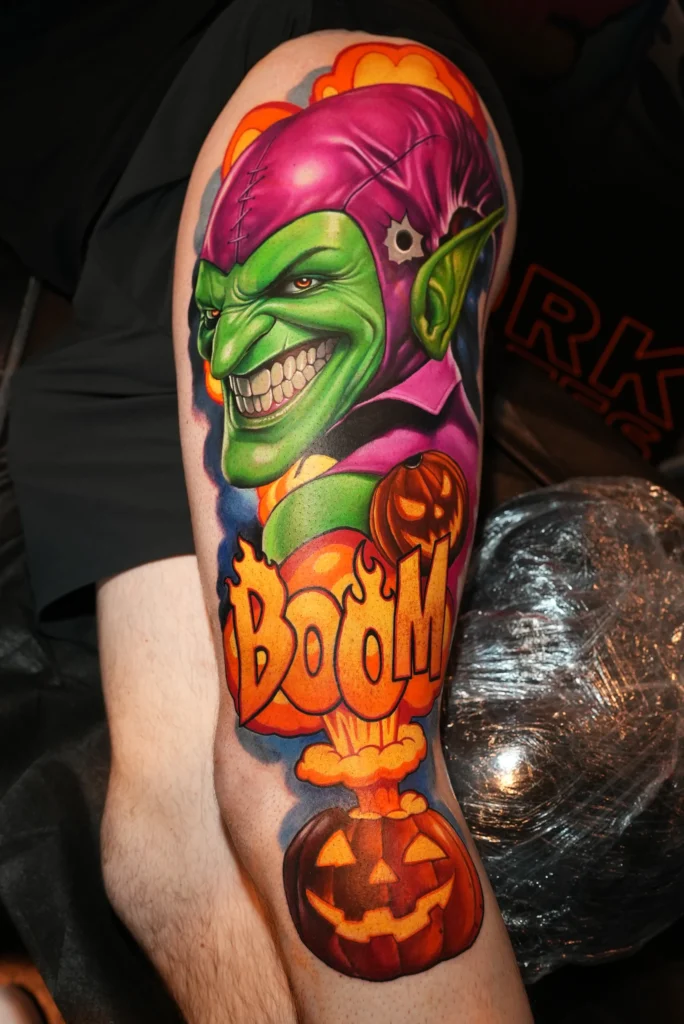
Comic books and tattoos grew up side by side. Both speak the same visual language: bold outlines, limited but powerful colors, and images designed to be understood at a glance. This is a short look at how they came together, from sailor flash to the color realism superheroes tattooed today.
Sailors, flash and the first popular tattoos
For generations, tattoos were closely linked to life at sea. Sailors collected symbols like anchors, swallows and ships, each with its own meaning. Tattoo shops displayed their designs on sheets of "flash": ready-made drawings with thick lines and simple, bright colors that customers could choose from the wall.
That style, built to read clearly on skin and last for years, shares a lot with the comic strips of the time.
Popeye: a comic star with an anchor tattoo
When Popeye first appeared in E. C. Segar's comic strip Thimble Theatre on January 17, 1929, he already looked the part of a sailor: pipe, squint, huge forearms and anchor tattoos. It is one of the clearest early meeting points between comics and tattoo culture, and a character that still ends up on skin almost a century later.
Sailor Jerry and American traditional
Norman "Sailor Jerry" Collins (1911–1973) joined the U.S. Navy at 19 and later opened his tattoo shop in Honolulu. His bold lines, solid color and striking compositions helped define the American traditional style, the same graphic clarity that makes comic art work so well on skin.
The Golden Age of comics
Action Comics #1, which introduced Superman, went on sale in April 1938 and is often seen as the start of the Golden Age of comic books. Superheroes became part of everyday pop culture, and with them came a new set of icons, symbols and characters that people would eventually want to wear.
New York: from ban to boom
New York has a special place in this story. In 1961 the city's Health Department made tattooing illegal, citing fears of hepatitis. Artists kept working underground, in private studios and behind other businesses, until the ban was finally lifted in 1997.
Since then, the city has become one of the most important tattoo scenes in the world, with artists from every style and background, including those dedicated to comics, cartoons and video games.
New school: cartoons with attitude
In the 1990s, new school tattooing pushed the cartoon look even further: exaggerated proportions, vibrant colors and a lot of humor. It opened the door for animated characters and comic heroes to become serious tattoo subjects. We wrote more about it in the evolution of new school tattoos.
Today: superheroes in color realism
Modern color realism takes those same characters and gives them volume, light and texture. The comic is still present in details like sound effects, speech bubbles or halftone dots, but the character feels almost three-dimensional.
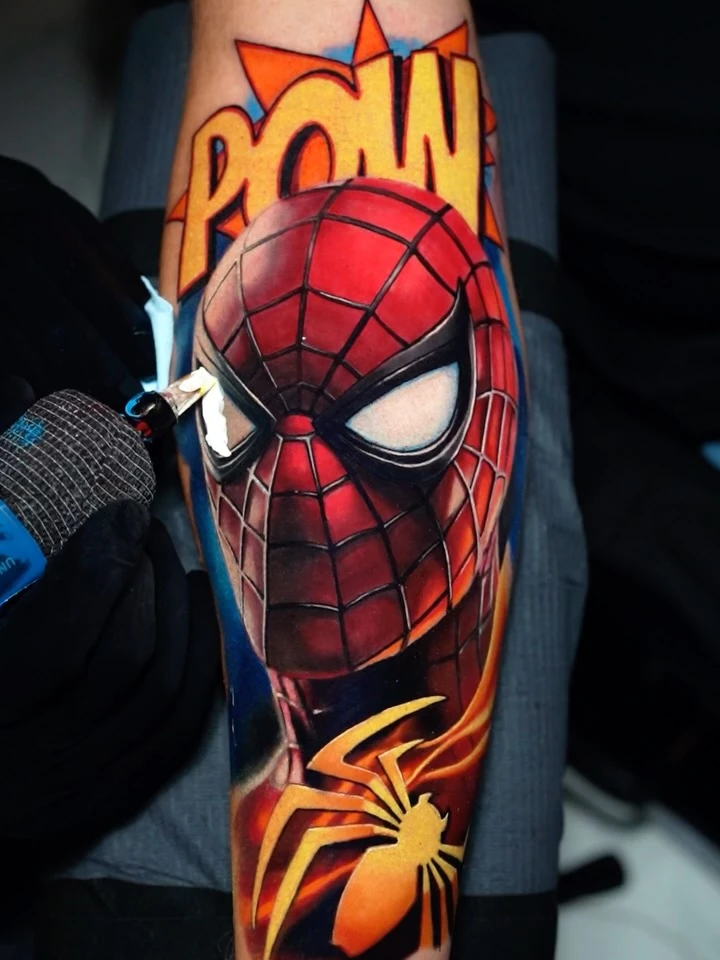
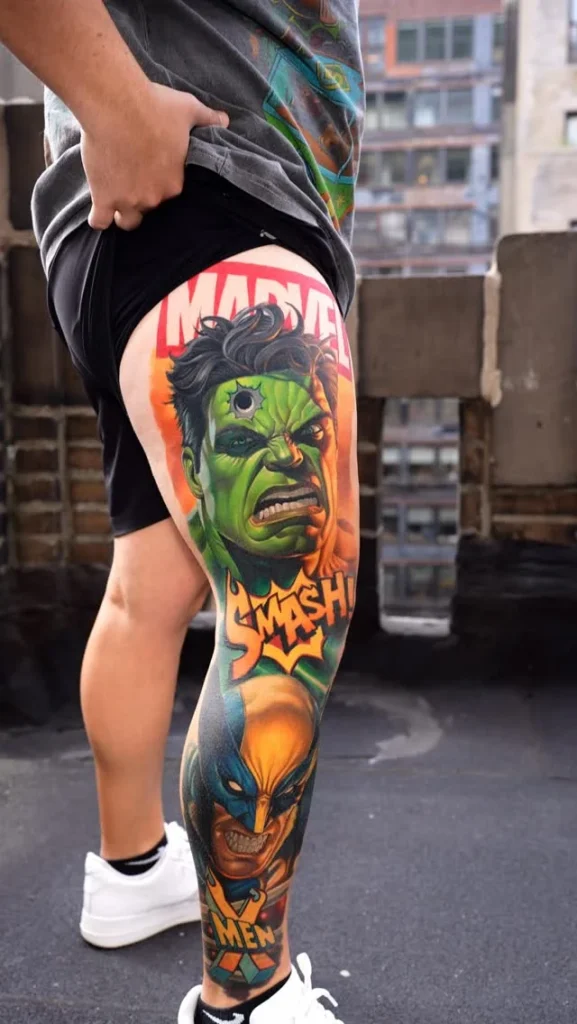
Comic lettering is one of the most recognizable ways to keep that heritage alive, like the "Smash!" next to this Hulk.
Your chapter in the story
Comic book tattoos have gone from sailor flash to full color superheroes, and the story keeps growing with every new piece. Explore the Marvel and cartoon galleries, and when you are ready, send your idea.
Sources
- Popeye, Wikipedia.
- Sailor Jerry, Wikipedia.
- Action Comics #1, Wikipedia.
- Tattooing Was Illegal in New York City Until 1997, Smithsonian Magazine.