Why We Tattoo Our Childhood Heroes: The Power of Nostalgia
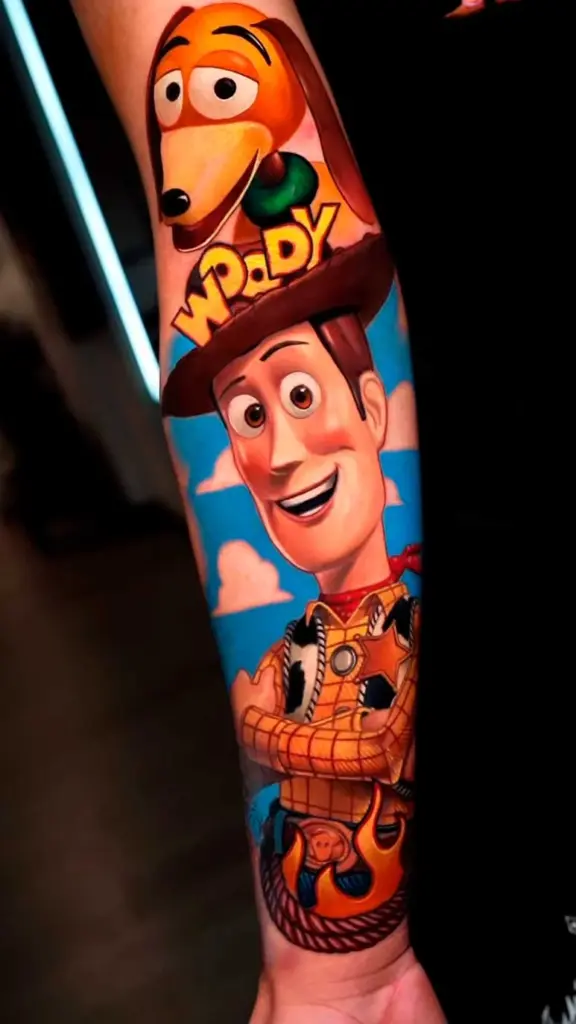
A cartoon from Saturday mornings, the console you shared with a sibling, the superhero on your lunchbox. Many of the tattoos in this gallery start with a memory. Why do so many adults choose to wear their childhood heroes on their skin? Psychology has some interesting answers.
What nostalgia really is
Nostalgia is a sentimental longing for the past. For a long time it was seen as something sad, even a kind of illness. Modern research paints a very different picture: nostalgia is a common emotion, and it is mostly positive.
In a well-known 2006 study, psychologists Tim Wildschut, Constantine Sedikides, Jamie Arndt and Clay Routledge found that nostalgic memories usually feature ourselves as the protagonist, often with close friends and family or during important moments. They also found that nostalgia is often triggered by negative moods and loneliness, and that it helps people feel more connected to others, feel better about themselves and generate positive feelings.
Nostalgia gives meaning to the present
A 2011 study led by Clay Routledge went further. Across several experiments, nostalgia increased people's sense of meaning in life, partly by making them feel more socially connected. In other words, looking back at what mattered helps us make sense of who we are today.
A 2024 study by Erica Hepper and colleagues tested these ideas across 28 countries and Hong Kong and found that nostalgia is experienced across cultures, although its emotional effects vary from place to place.
Why childhood heroes make powerful tattoos
Put that research next to a tattoo, and it makes sense that childhood heroes are such popular choices:
- They tell your story. A character is rarely just a character: it is the friend you watched it with, the house you grew up in or the summer you finished the game.
- They connect you with others. Fans recognize each other instantly. Clients often come back and tell Pablo that friends and even strangers on the street stop them to ask about their tattoo.
- They are a source of comfort. The heroes of childhood carry the feeling of safety and fun that came with them.
From the screen to the skin
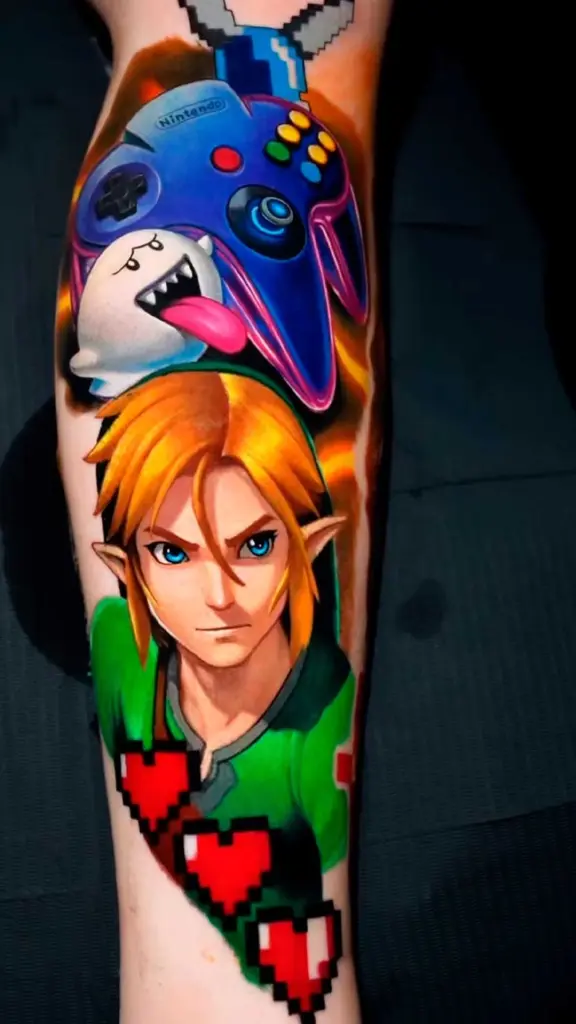
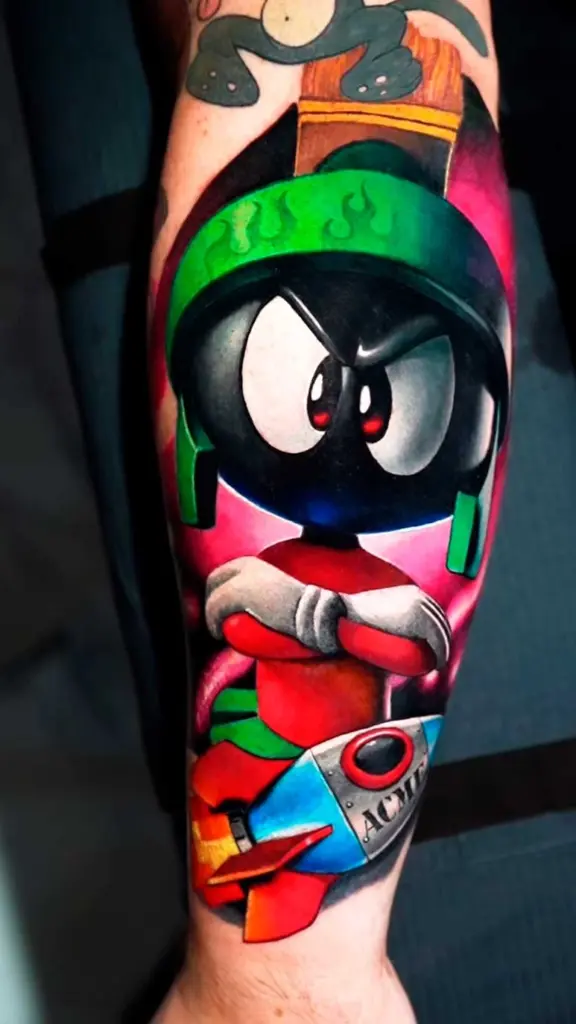
Cartoons, comics and games were designed to be loved: clear shapes, bold colors and big personalities. That is exactly what makes them work as tattoos. In color realism, those childhood heroes gain volume, light and texture, as if they had grown up with you.
Pablo himself has been drawing and painting in color since he was a kid, which is part of why these characters feel so natural in his work.
How to choose your childhood hero
- Start with a memory, not just a character. Which moment do you want to remember?
- Pick the version you grew up with. The 8-bit sprite, the 90s cartoon or the classic comic each tell a different story.
- Add a personal detail. A console logo, a quote or a year can make the piece unmistakably yours.
Revisit more ideas in cartoon tattoos for adults, explore the cartoon tattoo gallery and the video game tattoo gallery, and when you know which of your childhood heroes you want to wear, send your idea. The studio is Garden Ink NY, in Manhattan.
Sources
- Wildschut, T., Sedikides, C., Arndt, J., & Routledge, C. (2006). Nostalgia: Content, triggers, functions. Journal of Personality and Social Psychology, 91, 975–993.
- Routledge, C., et al. (2011). The past makes the present meaningful: Nostalgia as an existential resource. Journal of Personality and Social Psychology, 101(3), 638–652.
- Hepper, E. G., et al. (2024). Pancultural nostalgia in action: Prevalence, triggers, and psychological functions of nostalgia across cultures. Journal of Experimental Psychology: General.